
Immortality

Are humans immortal? I would answer yes, on a certain time scale.
Not because we live forever, but because we keep becoming new versions of ourselves. We do not remember being babies. In old age we do not behave like teenagers. Even the body quietly replaces itself. Red blood cells are renewed in about 120 days. Many tissues renew fast, such as skin and the gut lining. Over seven to ten years, a large part of the body is “largely renewed,” although not all cells follow the same clock.
The brain is different. Most neurons are long-lived and are not replaced in bulk. There is limited birth of new neurons in a few areas, especially the hippocampus, which is involved in memory, but this is not a full brain reset.
So where do “we” live if the parts keep changing? Biology says memories are stored in patterns, in networks of connections. When the brain dies, those patterns fade. And yet many of us feel the deeper story survives in the soul, as another carrier of information, like an archived file. Death may break the brain’s wiring, but it does not necessarily erase meaning, the true data of a life.
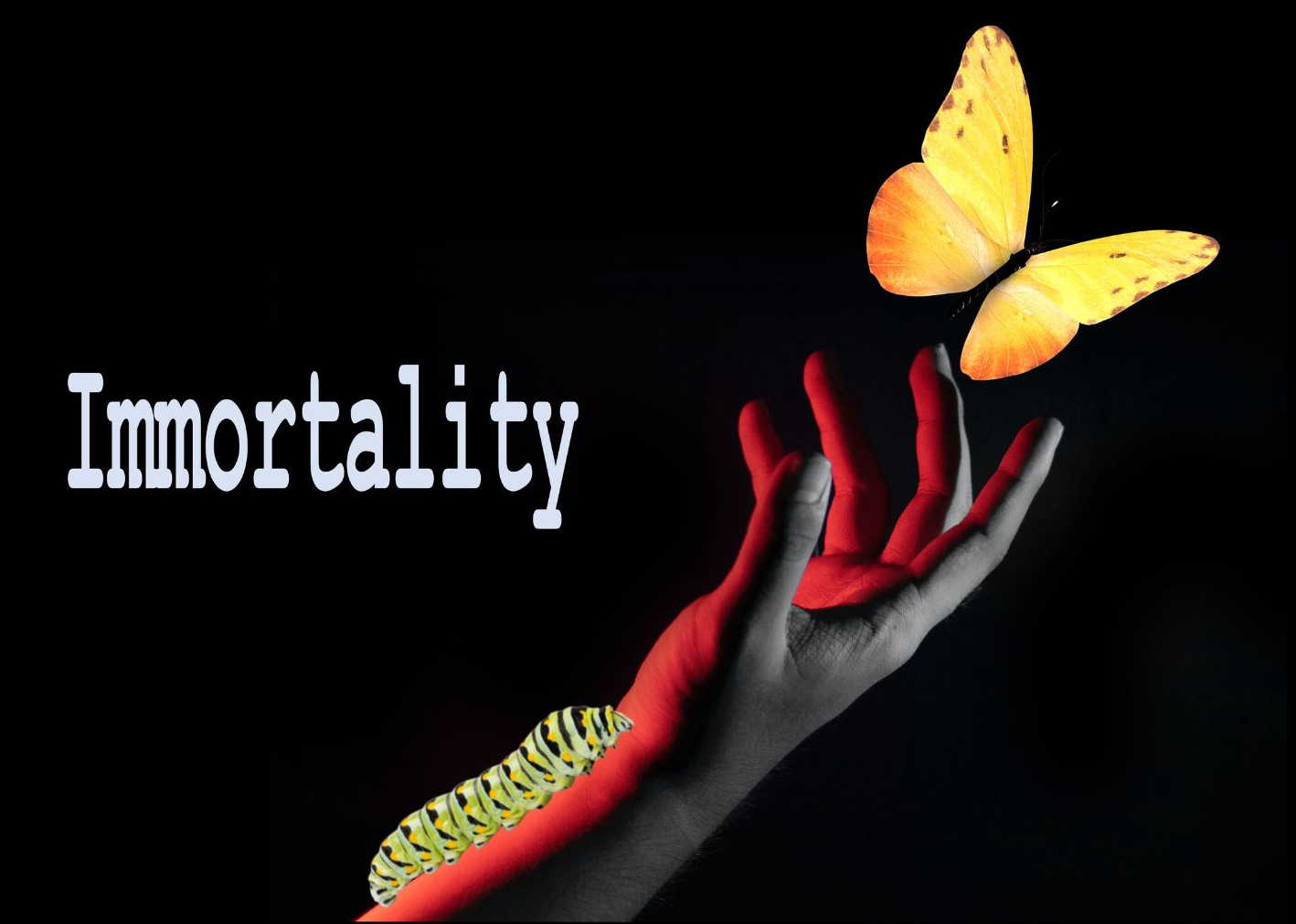
Nature supports this idea of transformation. A caterpillar becomes a butterfly, so different that it feels like reincarnation. Humans experience something similar, only on a slower scale. The caterpillar transforms all at once; we transform over a lifetime. Piece by piece: blood renews, skin renews, the gut lining renews, habits and beliefs shift, relationships reshape us. Look back ten years and you may see that you have already lived as several versions of yourself.
Metamorphosis is not limited to butterflies. Some insects develop through incomplete metamorphosis. A juvenile looks like a small adult and changes step by step through molts, as in grasshoppers, true bugs, and dragonflies. It is still metamorphosis, just continuous rather than dramatic. That pattern is closer to humans: not one cocoon, but many small upgrades.
Nature goes even further. Some jellyfish can return to an earlier life stage after reaching maturity, almost like rewinding the life cycle and bypassing the simple “grow, reproduce, die” storyline. Termites can also do something surprising. A juvenile that was developing wing buds can regress into a worker-like form when the colony needs more labour. Development becomes flexible, even reversible, when the system demands it.
So, are we immortal? Not as bodies that never end. But as living systems that keep renewing, reorganising, and carrying continuity through change.
See more in our essays on “Immortality” for Inner Circle subscription members.